



Quilling blog
Paper craft techniques – Origami, from history to the future

Oct
Paper Craft Techniques:
Origami, from history to the future
Good day, my friend! I hope this post inspires you to bring a crafting hobby into your life. All handcraft hobbies can be easily learned online and practiced right at home. Mine is quilling, and I hope you can find yours. Spending your time and creativity on a project will truly lift your day. It doesn’t matter what you choose to make—the outcome will always be wonderful when you hold a self-made treasure in your hands. Today, we are exploring paper techniques. Let’s go!
Unfold the Story of Origami: A Centuries-Old Craft
What is Origami?
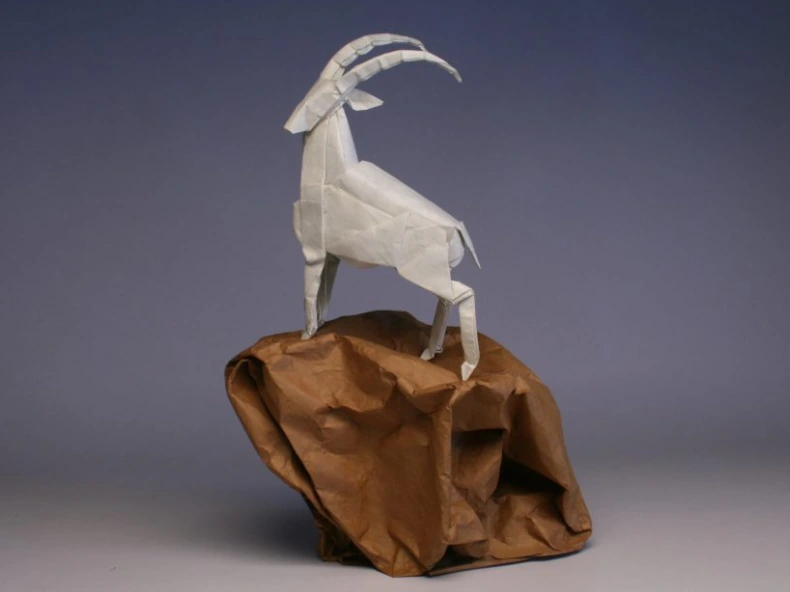
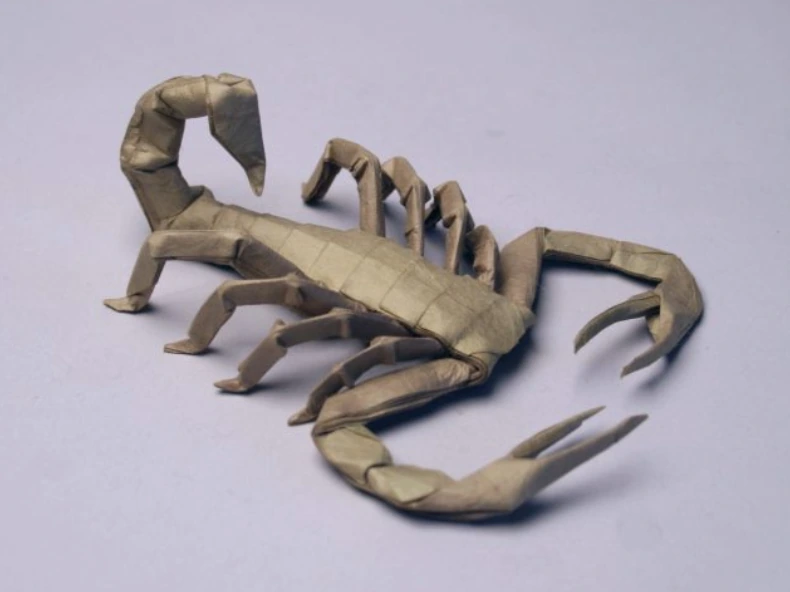
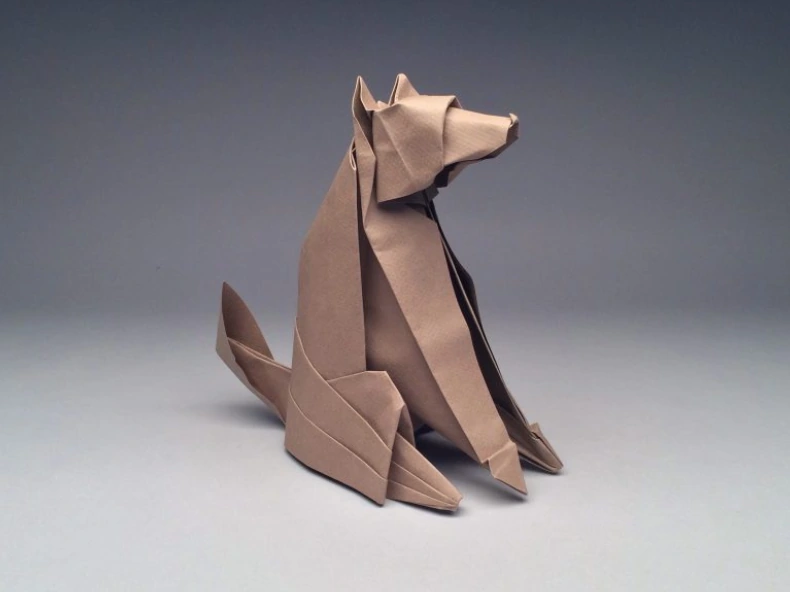
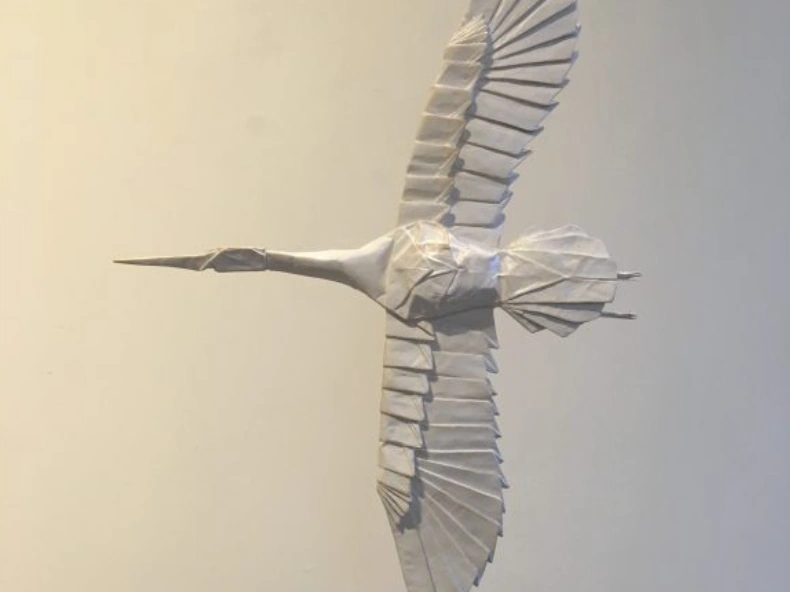
Origami is the most well-known paper craft technique in the world. The name comes from two Japanese words: “ori” meaning folding, and “kami” meaning paper. Technically, it is the art of paper-folding, where an artist folds a single sheet of paper to create various types of sculptures.
The process of turning a flat piece of paper into an intricate, three-dimensional shape requires mathematical precision. Creating these geometric patterns emphasizes a beautiful transformation from a simple sheet into a desired form.
The Evolution and History of Origami
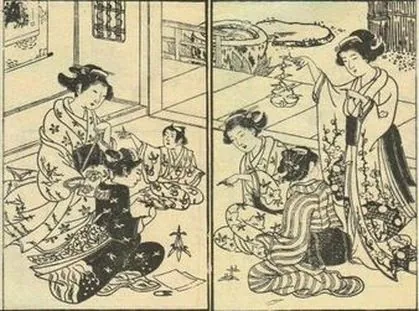
Pinpointing the exact origin of paper folding is challenging, as it emerged as a popular ancient art form across China, Japan, and parts of Europe. However, the earliest definitive historical record of traditional Japanese origami dates back to 1680, appearing in a short poem by the famous author Ihara Saikaku that references paper butterflies. During this era, the craft was deeply woven into cultural milestones, elite gift-giving customs, and sacred religious ceremonies.
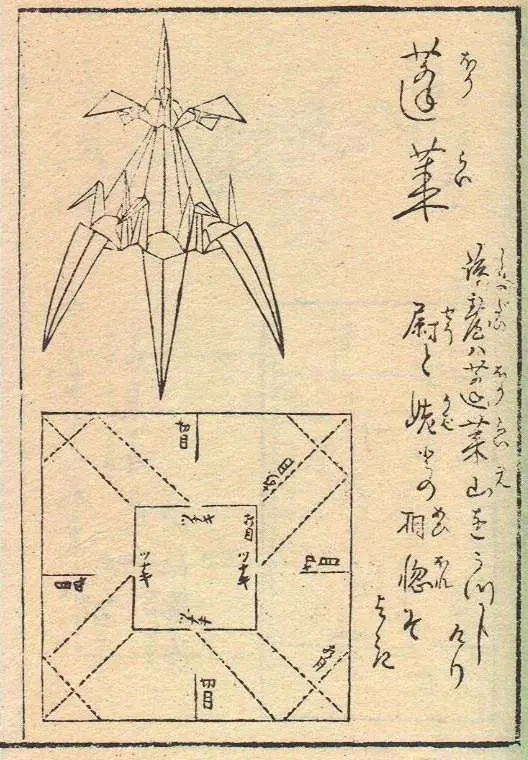
The landscape of the craft changed forever in 1797 with the publication of Hiden Senbazuru Orikata (The Secret of Folding One Thousand Cranes) by Akisato Rito—widely recognized as the world’s very first origami book.
Back then, the techniques relied on simple, traditional folding sequences passed down through generations. Rather than using complex diagrams, early artists relied on intuitive mental patterns to craft abstract, charming representations of nature—such as frogs, fish, tortoises, and the legendary flapping crane, which remains the most iconic and universally loved origami pattern to this day.

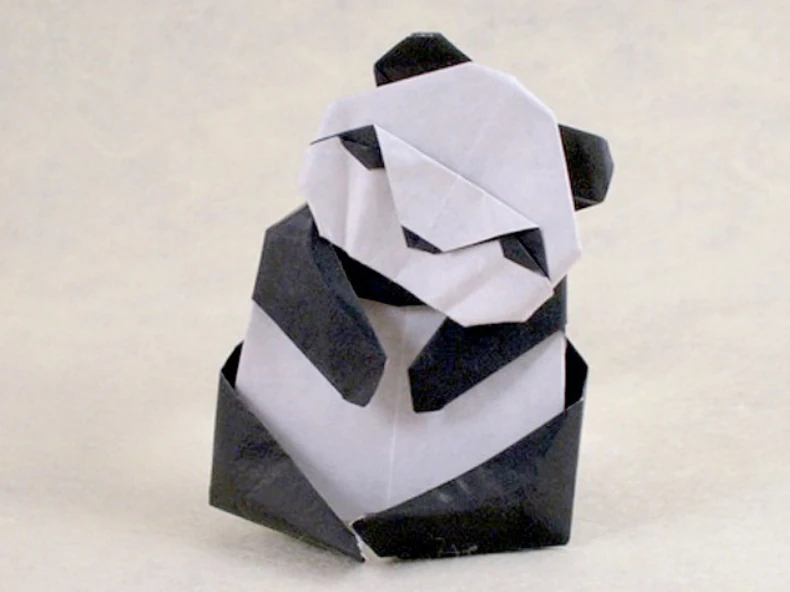
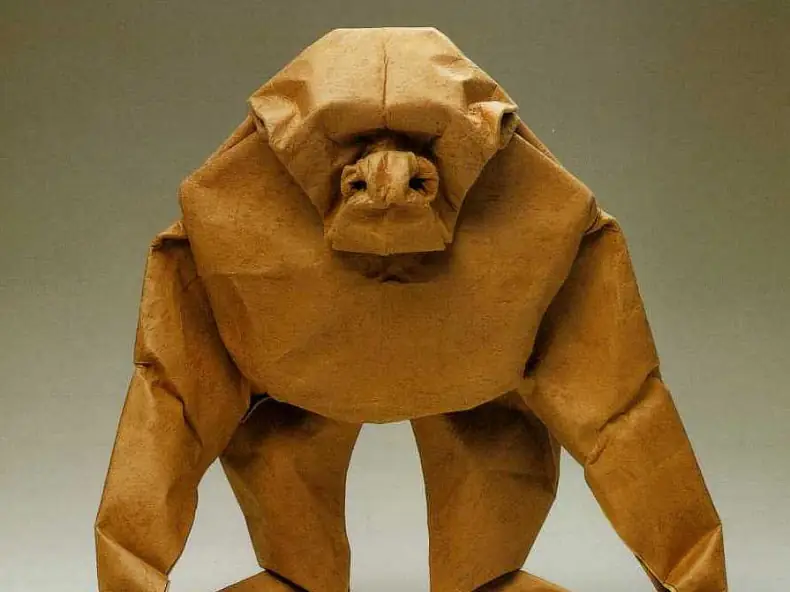
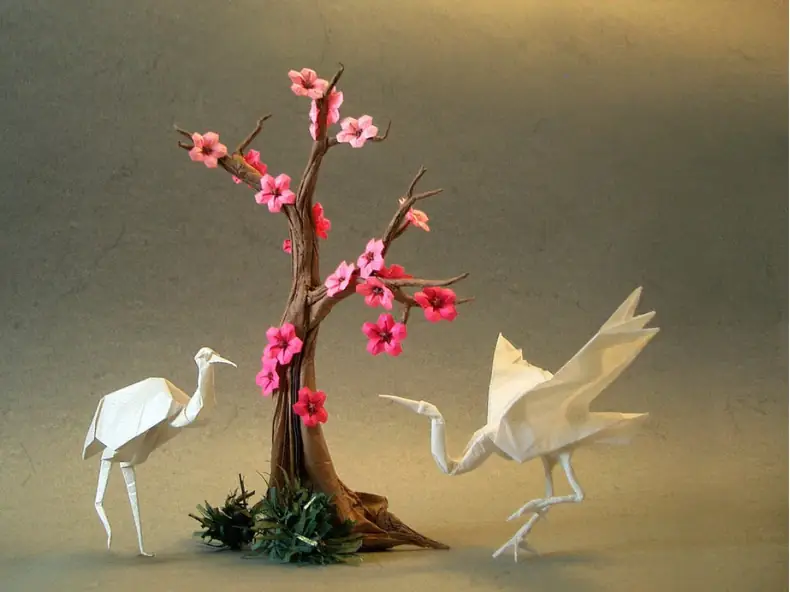
The Modern Revolution: Where Art Meets Science
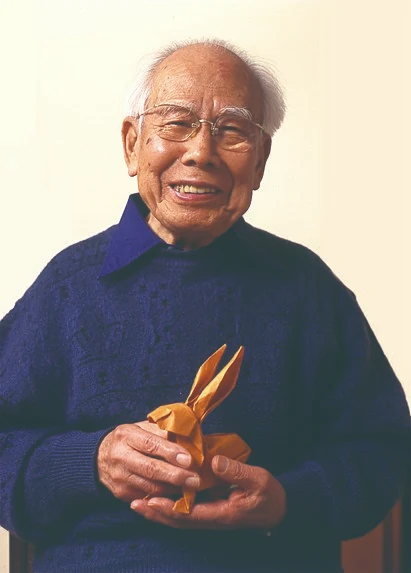
The true turning point for modern paper folding came with Akira Yoshizawa (1911–2005), universally celebrated as the father of modern origami. Before Yoshizawa, origami was largely treated as a simple children’s pastime or a rigid folk tradition. His journey to changing the medium started with a deep understanding of geometry; as a young technical draftsman in a factory, he actually used origami to teach his junior workers the spatial concepts of geometry and engineering.
Despite his brilliance, Yoshizawa lived in extreme poverty for decades, quietly dedicating his life to creating thousands of entirely new, lifelike models. His massive breakthrough arrived in 1954, when he published his landmark book, Atarashi Origami Geijutsu (New Origami Art).
In this work, Yoshizawa introduced a revolutionary system of dashed lines, dotted lines, and stylized arrows to clearly map out folds:
- The Valley Fold: Represented by a simple dashed line, instructing the creator to fold the paper forward, forming a “V” shape.
- The Mountain Fold: Represented by a dot-and-dash pattern, telling the creator to fold the paper backward like a ridge.
- The Action Arrows: A complex family of arrows that could visually communicate instructions to “turn the paper over,” “sink a pocket,” or “fold and unfold to create a crease line.”
This system did much more than provide clean instructions; it completely removed language barriers. Later refined alongside Western masters into the Yoshizawa-Randlett system, it established a universal visual language. For the first time in history, an artist in Tokyo could share a complex design with a creator in London or New York without needing a single word of translation. This code sparked an explosion of interest across the West and laid the foundation for modern geometric paper design.
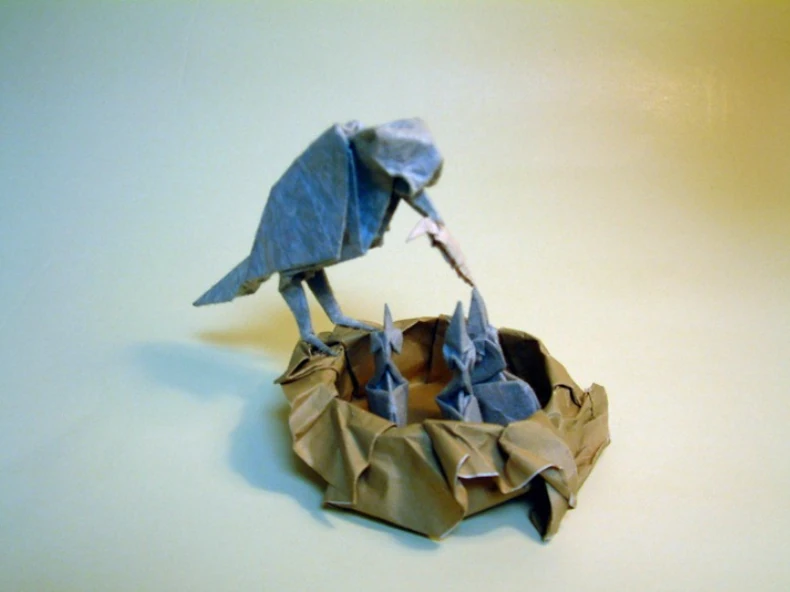
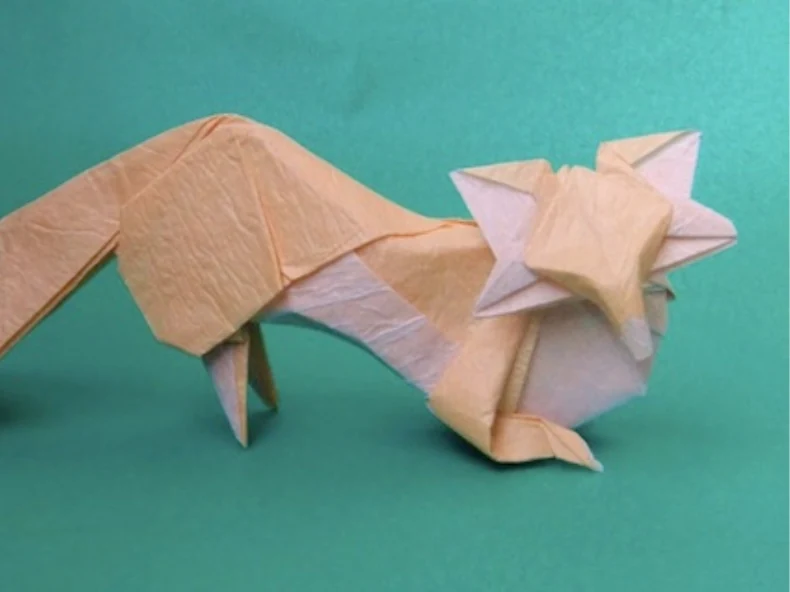
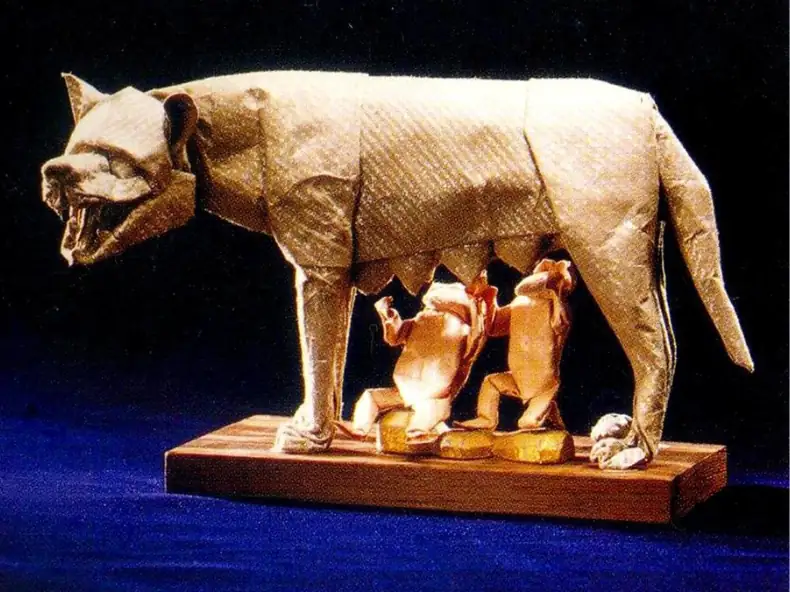
Beyond the math and diagrams, Yoshizawa infused the cold geometry of paper with living soul. He invented a groundbreaking technique called wet-folding. By dampening thick paper slightly before folding it, he allowed the fibers to soften, allowing for rounded curves, soft organic shapes, and a sculpted look. Once the paper dried, it retained its shape rigidly. This single invention transformed origami from sharp, angular, abstract representations into a fluid, highly respected fine art form.
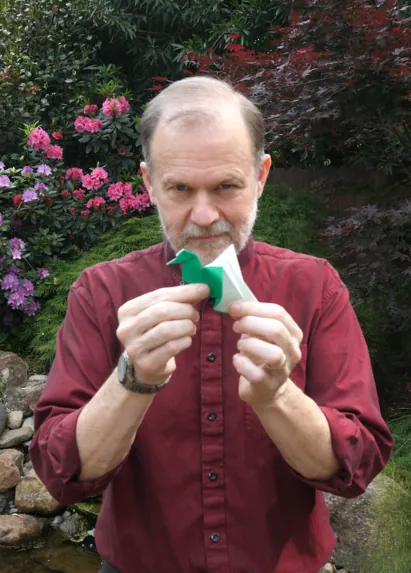
Today, when it comes to pushing the absolute boundaries of complexity, the world looks to Robert J. Lang. A physicist and master folder, Lang bridged the gap between artistry and engineering with his groundbreaking 2003 book, Origami Design Secrets: Mathematical Methods for an Ancient Art. By introducing advanced concepts like “circle packing” and “mathematical molecules,” Lang gave creators a blueprint to design hyper-realistic models of unbelievable complexity.
Because of these modern pioneers, origami has evolved far beyond a relaxing, creative hobby—it is now a powerful mathematical tool used to solve real-world problems.
The secrets of this ancient art form are actively shaping the future of global technology. Today, engineers and scientists use origami principles to tackle incredible challenges, including:
-
Space Exploration: Helping NASA tightly pack giant solar shrouds into rockets that seamlessly unfold once in space.
-
Medicine: Designing microscopic, mesh heart-support implants that travel safely through blood vessels before expanding.
-
Automotive Safety: Running precise computer simulations to perfect how airbags rapidly deploy and fold.
-
Tech Hardware: Allowing smartphone manufacturers to intricately fold high-performance antennas inside ultra-thin device bodies.

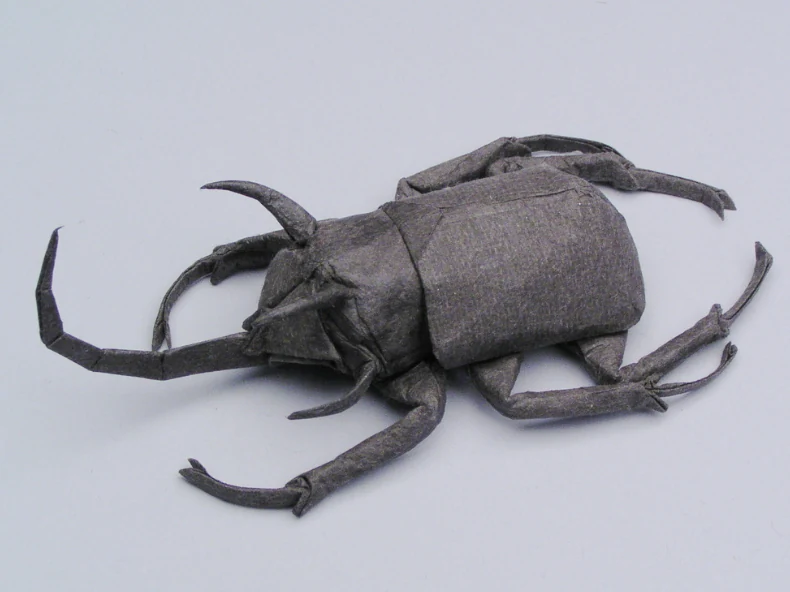
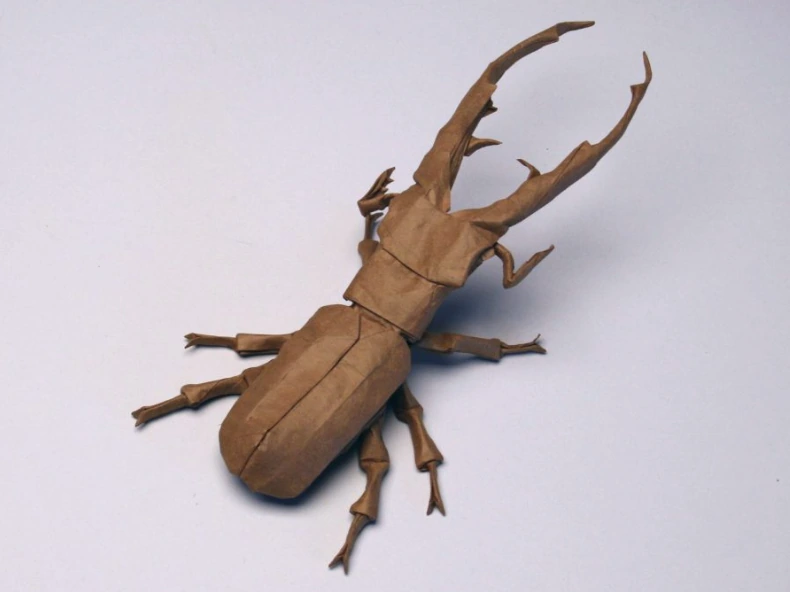
This blog post explores how engaging in handmade paper craft techniques serves as a powerful source of daily joy, mindfulness, and creative fulfillment, using the history and evolution of origami as a prime example.
Here is a breakdown of the key points covered in the post:
-
The Joy of Crafting: The post opens with a welcoming message emphasizing that handmade hobbies can be easily learned online and practiced at home to lower stress and elevate your daily mood. It frames the final physical artwork as a unique, self-made treasure.
-
Understanding Origami: It defines origami by its Japanese roots (“ori” for folding, “kami” for paper) and explains the technical mastery required to transform a flat, two-dimensional sheet into an intricate, geometric, three-dimensional sculpture.
-
Historical Evolution: The post highlights the deep roots of paper folding in China, Japan, and Europe. It traces origami’s formal history from early recorded Japanese texts in 1680 and the world’s first origami book in 1797 (Hiden Senbazuru Orikata), where designs relied on simple mental patterns for abstract animals like the iconic flapping crane.
-
The Modern Pioneers: It details the massive impact of Akira Yoshizawa, the father of modern origami, who introduced a universal diagramming system that removed language barriers and allowed the art to spread globally. It then transitions to Robert J. Lang, whose mathematical theories (“circle packing”) enabled hyper-realistic, complex designs.
-
Where Art Meets Science: The post concludes its origami segment by showing how paper-folding principles have evolved into critical engineering solutions used today by NASA (solar shrouds), medical manufacturers (heart-support implants), automotive designers (airbag simulations), and tech companies (internal antennas).
-
Connection to Quilling Arts: It wraps up by connecting the mindfulness of paper crafts back to Quilling Arts’ own 20-year passion for handcrafted paper quilling cards, providing contact information and a list of major local bookstores and historic tourism hubs in Vietnam where their physical products can be purchased.
References & Resources
To preserve history of paper craft integrity and honor the institutions dedicated to safeguarding these rare crafts informations:
Georgia Institute of Technology (Georgia Tech): Read their detailed historical reference exploring the Kinetic Joy and cultural background of origami history.
Wikipedia – History of Origami: View a comprehensive timeline tracking the chronological evolution, geographic roots, and traditional uses of origami across different cultures.
Lang Origami (Official Website of Robert J. Lang): Explore the cutting-edge intersection of art and science, showcasing advanced mathematical theories, “circle packing” concepts, and real-world engineering applications of complex modern origami design.
Thank you for your support of our products and content. Please help us share this with our community.